 Business License

How to Choose the Right Glass Spice Jar Supplier for Wholesale Orders
The first time I watched an importer open a container of spice jars and find 15% of them cracked, I learned something that stuck with me.
The buyer had done everything right on paper. The price was competitive. The samples looked great. The supplier had good reviews. But when the container arrived at the Port of Rotterdam, nearly 3,000 jars were destined for the dumpster. The glass was thin. The rims were uneven. And the bamboo lids didn't seal properly.
That buyer lost their margin on that order. They lost their customer's trust. And they spent the next six months finding a new supplier.
The global glass spice jars market was valued at over USD 5.72 billion in 2025 and is expected to reach USD 8.89 billion by 2035, growing at a CAGR of 4.5% Glass Spice Jars Market Report, Future Market Insights, 2025. Demand for stackable jar sets has increased by around 40% from North American and European buyers in the last two years Japanese-Style Glass Spice Jars trend analysis, JM Borosilicate, 2026.
With that much volume moving across borders, choosing the right supplier is not just a procurement decision. It's a strategic one.
In our comprehensive guide on How Glassware Is Packed and Shipped Safely Around the World, we cover the full spectrum of glassware logistics. This article zooms in on one specific challenge: how to evaluate and select a glass spice jar supplier that delivers consistent quality, meets compliance standards, and scales with your business.
The Material Question: What Glass Should Spice Jars Be Made Of?
Here's a quick industry reality. Spice jars do not need borosilicate glass.
Unlike coffee carafes, tea pitchers, or bakeware—products that face boiling water and oven temperatures—spice jars sit on shelves or in cabinets at room temperature. They hold dried herbs, seeds, and powders. They are never subjected to thermal shock. The standard material for spice jars across the global industry is soda-lime glass—specifically, food-grade soda-lime glass that meets FDA or LFGB requirements.
The real question is not "borosilicate or soda-lime?" It's "what grade of soda-lime glass, and what level of quality control?"
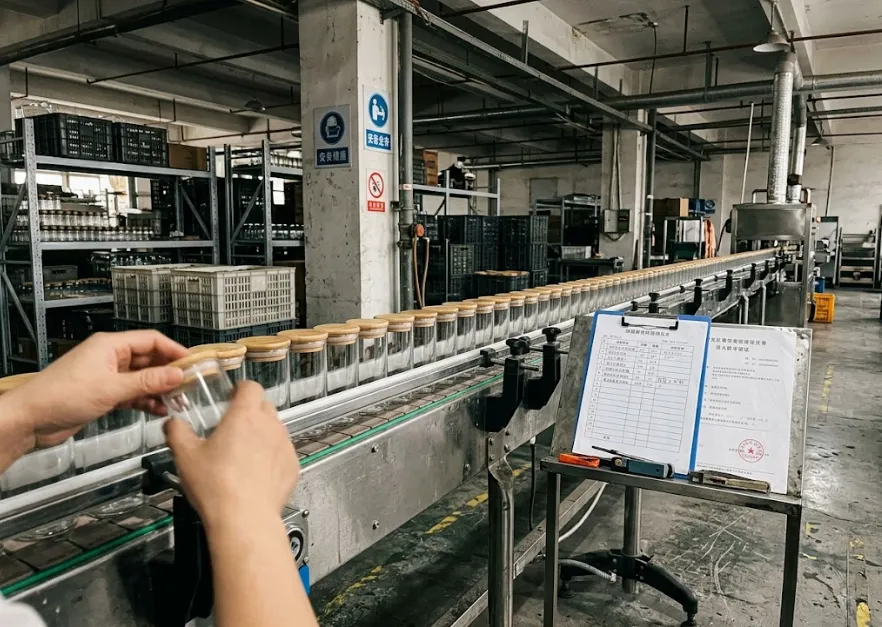
Here's what actually matters for spice jars:
| Quality Factor | Why It Matters |
|---|---|
| Wall thickness consistency | Thin spots crack during shipping; uneven thickness looks cheap |
| Rim flatness and smoothness | Determines whether the lid seals airtight |
| Bubble and inclusion content | Bubbles weaken the glass; inclusions are contamination risks |
| Annealing quality | Poor annealing creates internal stress; jars crack unexpectedly |
| Dimensional accuracy | Lids must fit consistently across the entire production run |
Cheap spice jars fail on these specs. Premium spice jars pass them. The glass type is the same—soda-lime. The difference is the manufacturing discipline.
If a supplier tries to sell you "borosilicate spice jars," ask yourself why. It's a waste of material cost for a product that never sees heat. And a supplier who recommends unnecessary glass upgrades may not understand the application—or may be padding the quote.
For spice jars, the material conversation should focus on food-grade soda-lime glass with documented quality control for thickness, rim finish, and annealing.
The Compliance Question: FDA, LFGB, and What They Actually Mean
Here's something I've learned the hard way. A supplier saying "we are FDA compliant" is not the same as providing a test report.
In the United States, the FDA requires that glassware intended for food contact must not leach lead or cadmium above the levels set out in the FDA's guidance for ceramic and glass foodware. For European markets, LFGB certification (Germany's food safety standard) is even more rigorous. For glassware, LFGB testing covers heavy metal leaching and sensory testing for odour or taste migration.
The key difference? LFGB requires testing with specific food simulants—often more stringent than FDA. A product that passes LFGB is essentially guaranteed to pass FDA and most other global standards. But you need to see the actual test reports, not just a marketing line on a supplier's website.
Food safety is non-negotiable. Ensure suppliers use FDA-compliant soda-lime glass free from heavy metals like lead and cadmium. For wooden lids, confirm sustainably sourced bamboo or hardwood treated with food-safe, water-resistant finishes. Airtight models should include BPA-free silicone gaskets; their presence enhances shelf life and prevents moisture ingress.
When evaluating suppliers, prioritize those with verifiable certifications:
FDA and LFGB compliance for food-contact glass
FSC certification for responsibly sourced bamboo
ISO 9001 for quality management systems
Where Your Supplier Is Located Matters More Than You Think
The bulk of glass spice jar production is concentrated in Jiangsu and Anhui provinces in China, where vertically integrated facilities combine raw material access, advanced molding technology, and export logistics. Xuzhou has evolved into a specialized hub for food-grade glass containers, hosting manufacturers equipped with automated blow-molding lines capable of producing over 500,000 units monthly per facility.
Proximity to silica sand and soda ash sources reduces input costs, while nearby ports like Lianyungang and Qingdao enable faster shipping cycles—cutting lead times by up to 15% compared to inland suppliers.
Key manufacturing clusters in Shandong, Hebei, and Guangdong provinces combine specialized glass forming, sustainable wood processing, and export-ready packaging under one regional network. Shandong and Hebei lead in soda-lime glass production, leveraging access to raw silica and skilled labor to maintain consistency in wall thickness and thermal durability. Guangdong excels in precision finishing, including tamper-evident seals, custom embossing, and labeling integration.
Most suppliers operate semi-automated blowing lines capable of producing between 50,000 and over half a million units monthly, with standard lead times of 15–30 days post-deposit. Port access via Qingdao, Tianjin, and Shenzhen further streamlines international shipping, minimizing transit delays.
If you're sourcing from China, understanding these regional dynamics helps you align your product requirements with supplier strengths—whether that's large-scale automation in northern China or precision finishing in the south.
Beyond the Sample: How to Evaluate Supplier Reliability
Selecting a dependable supplier involves assessing multiple operational metrics beyond product samples.
On-time delivery rate: Aim for ≥96%. Late shipments disrupt inventory planning and retail timelines.
Response time: Suppliers responding within ≤5 hours demonstrate organizational agility.
Reorder rate: Rates above 20% signal consistent customer satisfaction and product reliability.
Online transaction volume: Annual revenue exceeding $500,000 indicates scale and market validation.
For example, Xuzhou Das Packing Solutions Co., Ltd. reports a 97% on-time delivery rate and $1.1 million+ in online revenue, reflecting strong operational maturity. Similarly, Anhui Idea Technology Imp & Exp Co., Ltd. maintains a 96% fulfillment rate and a 20% reorder rate, suggesting reliable performance across repeat clients.
When you're evaluating a new supplier, ask for these metrics. If they can't provide them, that's a red flag. If they can, you have a basis for comparison.
Customization: Where the Real Differentiation Happens
For spice jars specifically, bamboo lids have become a symbol of sustainability and functionality. As consumer demand for eco-friendly kitchenware grows, so does the need for reliable suppliers who can deliver consistent quality, scalable production, and compliance with international standards.
Leading suppliers offer extensive customization options:
Color tinting (amber, cobalt, green) and frosted finishes
Shape variations (round, square, hexagonal)
Lid materials (bamboo, stainless steel, plastic with tamper-evident seals)
Logo application via silk screening, hot stamping, or label printing
Packaging configurations (multi-packs, display boxes, UPC-ready labeling)
The trend toward hybrid lids—bamboo with inner silicone—combines the natural look with performance, delivering airtight sealing without sacrificing aesthetics.
If you're looking to differentiate your product line, work with suppliers who offer these customization capabilities. Request pre-production samples to evaluate fit, finish, and sealing integrity before committing to mass production.
MOQ and Pricing: What to Expect
Glass jar suppliers generally require higher MOQs (1,000–10,000 units) due to mold setup costs, though some accommodate 100–500 piece runs at higher per-unit prices.
For standard stock jars, MOQs can be as low as 1,000 pieces. For customized products—custom shapes, colors, or embossing—MOQs typically range from 10,000 to 50,000 units.
Pricing varies widely based on volume and customization level. For 3 oz glass spice jars, wholesale prices typically range from $0.12 to $0.64 per unit. Bamboo lid options often command a slight premium.
In 2026, recycled content is adding slight premiums of 10-15% for high recycled content glass. But for many buyers, that premium is worth paying—sustainability is no longer a niche claim; it's a market expectation.
A Story About a Buyer Who Did It Right
I worked with a European spice brand about two years ago. They were launching a premium line of organic spices and needed custom glass jars with bamboo lids, branded labels, and airtight seals.
They didn't just pick the first supplier they found. They developed a supplier evaluation framework. They requested samples from five different factories. They tested the samples for thermal shock resistance, seal integrity, and label adhesion. They visited the shortlisted factories to inspect production lines and quality control processes. They verified certifications by contacting the issuing bodies directly.
The supplier they chose wasn't the cheapest—they were about 8% higher than the lowest quote. But their breakage rate was under 1%. Their delivery was on time, every time. Their jars passed LFGB testing without issues.
That brand's product launched successfully. They reordered three times in the first year. And they built a supplier relationship that has lasted years.
That's the difference between treating supplier selection as a transaction and treating it as a partnership.
The Checklist Every Importer Needs
After years of evaluating glassware suppliers, here's my non-negotiable checklist for spice jar sourcing.
Material verification: Specify food-grade soda-lime glass in writing. Request material composition documentation. If a supplier recommends borosilicate for spice jars, ask why—it's usually unnecessary and signals a lack of understanding.
Compliance documentation: Request actual test reports—FDA, LFGB, or both—from accredited labs. Don't accept generic certificates.
Sample testing: Request 5-10 fully packaged samples. Test for seal integrity, dimensional accuracy, and visual quality (bubble content, rim finish).
Factory audit: If possible, visit the factory or request a virtual walkthrough. Inspect production lines and quality control processes.
Performance metrics: Ask for on-time delivery rate, response time, and reorder rate data.
MOQ and pricing: Get MOQ, pricing tiers, and customization costs in writing before committing.
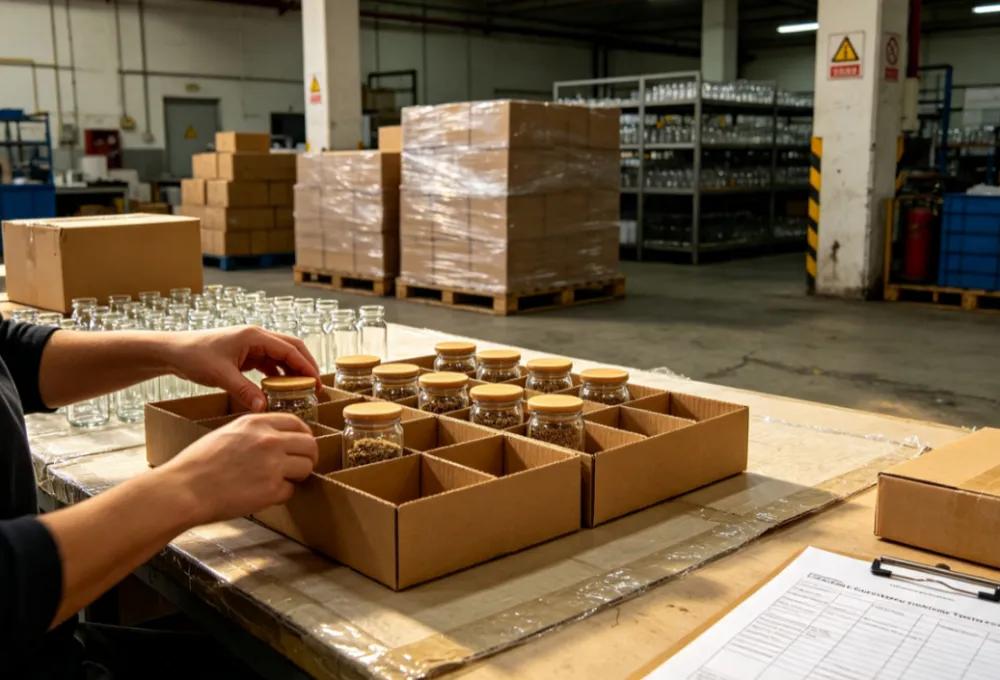
Packaging specifications: Don't assume the supplier knows what you need. Specify carton strength, dividers, and palletization requirements.
Lead times: Confirm production lead times and shipping timelines. Build in buffer for customs and logistics.
Communication protocol: Establish clear communication channels and points of contact before the first order.
What KINGSTAR GLASSWARE Does Differently
At KINGSTAR GLASSWARE, we've spent years refining our spice jar production across our entire range—from 80ml mini jars to 200ml retail sizes, all in food-grade soda-lime glass, with bamboo, acacia, or stainless steel lid options.
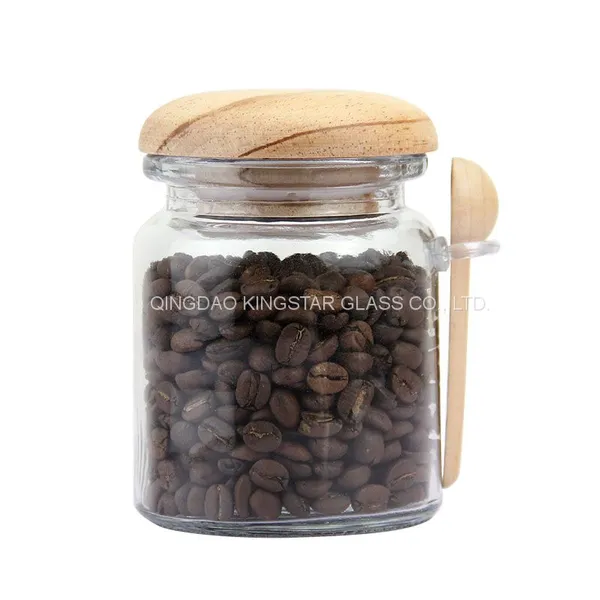
We use food-grade glass that meets FDA and LFGB food-contact standards. We offer OEM/ODM customization with low MOQ, including custom sizes, colors, shapes, and branding. Our glass spice jars with integrated spoon lids feature a one-piece lid and spoon design for mess-free dispensing and maximum freshness. We provide factory-direct wholesale for kitchenware retailers and importers worldwide.
We've learned the hard way what works and what doesn't. And we've built our quality control around the simple belief that if it doesn't meet your specifications, it doesn't leave our factory.
For a complete overview of glassware packaging, sea freight logistics, and export logistics, read our comprehensive guide on How Glassware Is Packed and Shipped Safely Around the World.
Ready to find the right spice jar supplier for your wholesale orders? Reach out to KINGSTAR GLASSWARE. Tell us your product, your volume, and your target market. We'll show you how we manufacture—and we'll back it up with real test results.
FAQ
What type of glass should spice jars be made of?
Spice jars are made from food-grade soda-lime glass. Borosilicate glass is unnecessary for spice jars because they never face thermal shock—they sit on shelves at room temperature. The quality difference between cheap and premium spice jars comes down to wall thickness consistency, rim finish, annealing quality, and bubble content—not the glass type.
What certifications should I look for when sourcing glass spice jars from China?
Prioritize suppliers with FDA compliance for the US market and LFGB certification for European markets. Also look for ISO 9001 for quality management systems and FSC certification for responsibly sourced bamboo lids. Request actual test reports from accredited labs—not generic certificates.
What's a typical MOQ for glass spice jars, and how does it affect pricing?
Standard stock jars typically have MOQs of 1,000 pieces. Customized products—custom shapes, colors, or embossing—usually require 10,000 to 50,000 units. Pricing ranges from $0.12 to $0.64 per unit for standard 3 oz jars, with bamboo lid options commanding a slight premium. Lower MOQs are available at higher per-unit prices.
Recently Posted
-
Glass Water Bottle Sourcing Guide: What B2B Importers Need to Know
August 27, 2026The first time a retail buyer told me she was replacing her entire water bottle range, I assumed it was about price.It wasn't. Read More
 -
Glass Oil Dispensers Are Having a Moment — What B2B Buyers Need to Know
August 26, 2026We used to think oil dispensers were boring. A bottle with a spout — what's there to get excited about?Then we started paying Read More
 -
Bamboo vs Metal vs Glass Lids for Wholesale Glass Jars
August 10, 2026(Key Takeaways)•Material Matters: The lid is just as important as the glass vessel itself when sourcing wholesale glass jars, dire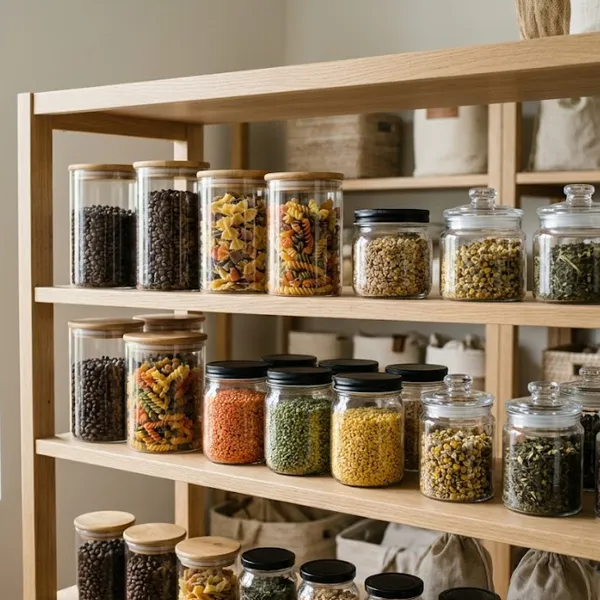 Read More
 -
The Science of Borosilicate Glass Food Containers: Why Thermal Shock Resistance is Key for B2B Procu
July 6, 2026(Key Takeaways)•Borosilicate vs. Soda-Lime: Borosilicate glass offers superior thermal shock resistance and chemical stability com Read More

Contact Us
Recommended Products
-
 Glass Flower Vases Wholesale – Bulk Decorative Vases for Distributors & Importers From KINGSTAR GLASSWAREUS$ 5MOQ: 1000 Pieces
 -
Big Glass Candy JarUS$ 0.4 - 0.8MOQ: 20000 Pieces
-
Big Glass DispenserUS$ 0.4 - 0.8MOQ: 20000 Pieces
-
Good Glass Storage JarUS$ 0.4 - 0.8MOQ: 20000 Pieces
-
Glass Fish BowlUS$ 0.4 - 0.8MOQ: 20000 Pieces